Challenges in EV Infrastructure Planning: Reactive to Predictive Intelligence
Exploring how smart EV charging infrastructure, demand forecasting, and predictive intelligence are driving the future of sustainable transportation. Covers infrastructure misalignment, operational inefficiencies, and data-driven solutions.
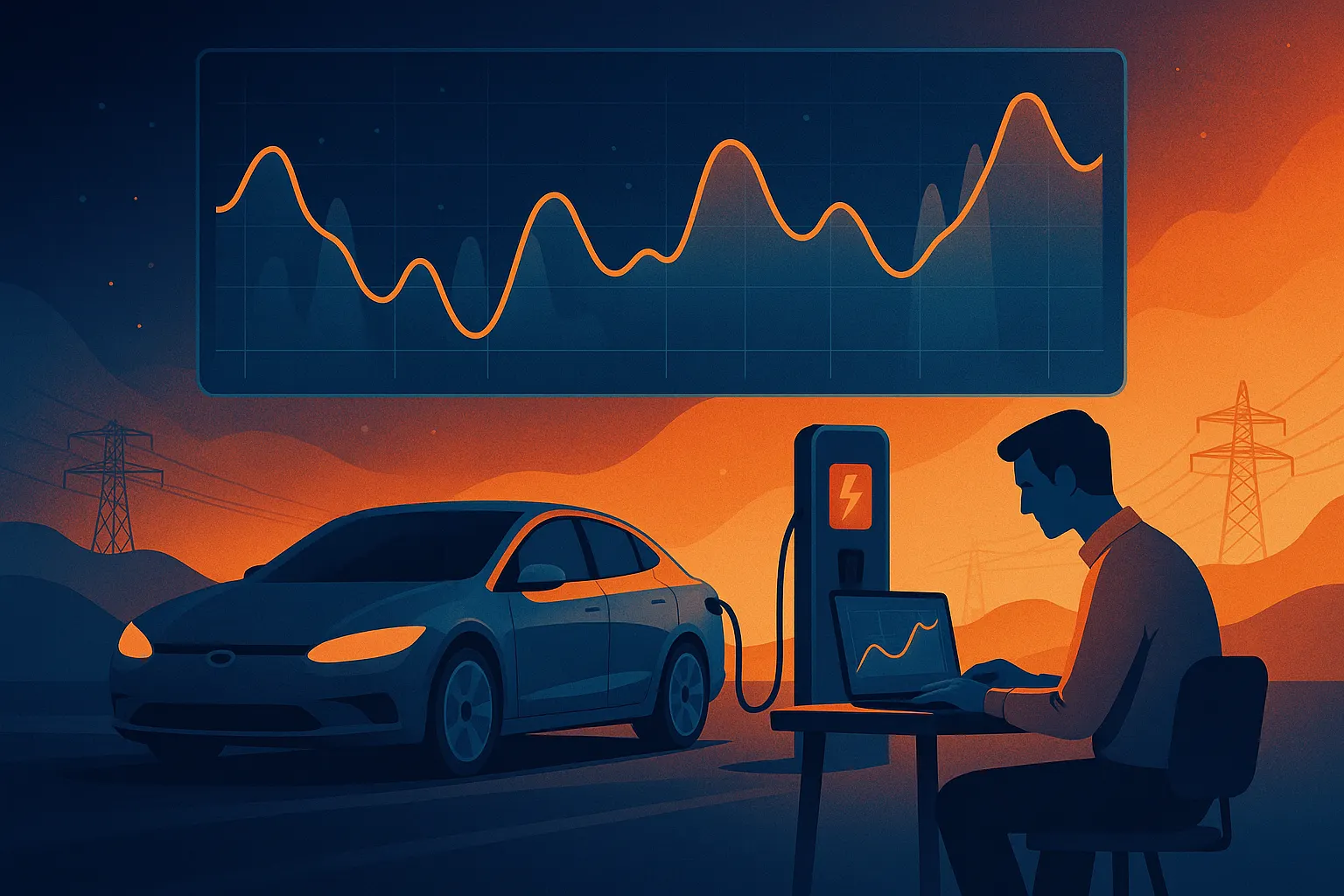
This article was originally published on Medium as part of the Build Better with SynergyBoat publication.
Overview
Electric Vehicles made a comeback in the late 20th century, driven by the urgent need for sustainable transportation. Global EV sales climbed to around 18% of total vehicle sales in 2023. Yet despite the growing urgency to cut global carbon emissions, the pace of EV adoption continues to face significant geographic disparities and limitations.
The Challenge Landscape
Infrastructure Misalignment
- Urban centers boast dense charging networks while rural and suburban areas remain systematically underserved
- “Charging deserts” deter potential EV adoption in non-urban areas
- High capital expenditures ($7,000-$11,000 for Level 2, $100,000-$120,000 for DC fast charging)
Operational Inefficiencies
- Most charging networks operate reactively rather than predictively
- Without real-time monitoring and demand forecasting, operators can’t anticipate failures
- Unexpected outages, missed revenue opportunities, and poor utilization
Strategic Planning Gaps
- Charging stations frequently deployed without traffic pattern analysis or demographic studies
- Static pricing models fail to capture the dynamic nature of energy demand
Data-Driven Solutions
The transformation requires a fundamental shift from reactive management to predictive intelligence:
- Smart Location Profiling — Combining traffic density, vehicle movement patterns, infrastructure gaps, and charging behavior analytics
- Energy Demand Forecasting — Enables efficient scheduling and performance evaluation of charging stations
- Dynamic Pricing — Adjusting rates based on real-time demand can shift 20-30% of charging to off-peak hours
- Predictive Maintenance — Identifying potential failures before they occur
- Vehicle-to-Grid (V2G) — Treating EVs as mobile energy storage units for bidirectional energy flow
Our Approach at SynergyBoat
- Smart Infrastructure Planning — Using data to forecast where demand will grow and when usage will peak
- Predictive Maintenance — Anticipating failures before they impact users
- Dynamic Pricing Strategies — Time-based or usage-based pricing models tailored to different customer segments